

An ancient skull discovered in northern China and kept secret for 85 years has now provided a clear glimpse of the Denisovans, a long-extinct human species that researchers have sought to understand for many years. This remarkable identification was achieved through just 0.3 milligrams of preserved ancient dental plaque found on a single tooth.
It began in 1933, when a construction worker excavating near the Dongjiang Bridge in Harbin uncovered a large human skull buried beneath the soil. Instead of reporting it, he decided to conceal the fossil inside a disused well at his home.
For decades, the skull’s existence remained unknown. Shortly before his death in 2018, the man revealed the secret to his family. Once recovered and handed over to scientists, the fossil proved extraordinary: a complete skull from a human lineage that had previously been identified largely through DNA and a few bone fragments.

The Appearance of a Long-Concealed Skull
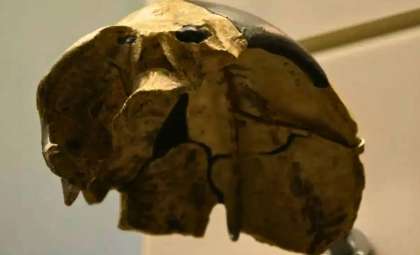
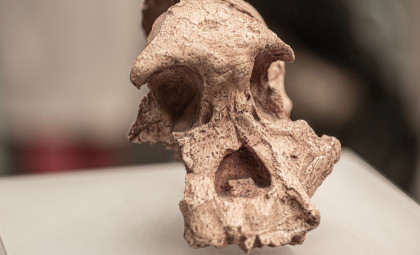
When Qiang Ji, a paleoanthropologist at Hebei GEO University, examined the fossil, he immediately recognized it didn’t match any known human species. The skull was notably large, with a broad braincase, prominent brow ridges, and a wide, low facial structure. Uranium dating established its age at over 146,000 years.
In 2021, Ji and associates proposed naming the fossil a new species, Homo longi, nicknamed “Dragon Man,” inspired by the Long Jiang area of its discovery. While this classification stirred debate, many experts suspected the skull was actually Denisovan—which posed a challenge since Denisovans’ true appearance had remained unknown.

The Denisovan group was first identified in 2010 by DNA extracted from a finger bone found in Siberia. Since then, the fossil record has been sparse, limited to fragmented teeth, bones, and a jawbone from Tibet.
National Geographic highlighted the Harbin skull as a potential breakthrough in revealing what Denisovans actually looked like.
Ancient Dental Plaque Unlocks the Skull’s Origins
Confirming the skull’s identity proved difficult. Attempts to extract usable DNA from its bones and teeth failed due to severe degradation. The key discovery emerged from an unlikely place: fossilized dental plaque, also known as dental calculus. Led by Qiaomei Fu of the Chinese Academy of Sciences, researchers analyzed the minuscule plaque clinging to a remaining tooth—only 0.3 milligrams, roughly the size of a poppy seed.
This tiny sample contained mitochondrial DNA matching Denisovan specimens previously found in Siberia. Additionally, the team studied proteins trapped within the skull’s petrous bone, a dense part of the inner ear well-known for preserving ancient biomolecules.

Both lines of evidence, detailed in studies published in Cell and Science in 2025, confirmed the skull’s Denisovan heritage. This finding marked a monumental advance, finally enabling scientists to visualize the Denisovan face after years without any imagery or physical representation.
Clarifying the Denisovan Legacy
The Harbin skull reveals Denisovans possessed a robust, distinctive build, featuring a large cranial size, prominent facial traits, and solid bone structure. This discovery helps link ancient fossils with Denisovan genetic traces still found in some modern human groups.
Certain contemporary populations, such as Tibetans, retain segments of Denisovan DNA that have contributed to adaptation, like thriving in high-altitude environments. The classification of Denisovans remains a topic of debate. Some scholars argue against treating Denisovans as a separate species because interbreeding among ancient human groups was common.

Svante Pääbo of the Max Planck Institute notes that categorizing species becomes complex when interbreeding occurred among Denisovans, Neanderthals, and modern humans. Details of the skull’s discovery remain debated, relying largely on family recollections, but the scientific identification draws strong support from genetic data, protein evidence, and the fossil’s distinct anatomical features.
- Categories:
- Science






0 comments
Sign in to Comment