

Many residents across the northern tier of the United States could witness the mesmerizing Northern Lights tonight, as NOAA predicts favorable auroral activity in several regions. From Alaska to parts of the Upper Midwest, skywatchers may want to keep an eye on the northern horizon after sunset. However, visibility will depend on factors such as cloud coverage, local light pollution, and the strength of the geomagnetic storm.
Regions with Potential Northern Lights Sightings
The strongest chances of seeing the aurora are concentrated in the northernmost areas of the country, bringing this usually Arctic spectacle within reach of many American stargazers.
Alaska stands out as one of the prime spots for aurora viewing due to its far-northern location. Southward, states including Washington, Idaho, and Montana may also witness some auroral action. Further east, the northern Plains and Upper Midwest—specifically North Dakota, South Dakota, Minnesota, and Wisconsin—are also within the zone of possibility.

It's important to note that being within these states doesn't guarantee everyone will see the aurora. The brightness and position of the lights can shift quickly, and subtle differences in sky conditions and artificial lighting can distinguish a vivid display from an empty sky.
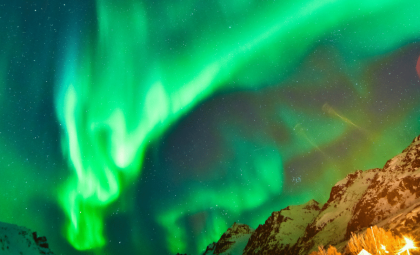
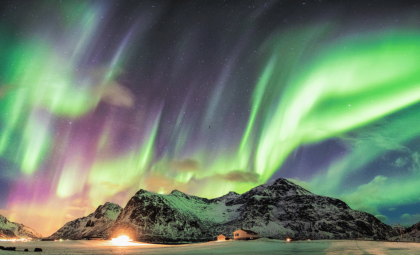
Those situated further south might catch a more subtle display, with the aurora appearing as a faint glow near the northern horizon. Often, such activity is easier to capture in long-exposure photographs rather than witnessed directly with the naked eye, unlike the dramatic visuals common in Norway, Finland, and Sweden.
Canada remains well-positioned for aurora sightings as well, given much of the country lies at higher geomagnetic latitudes. Those interested should seek out dark, open spaces facing north for the best chance.
NOAA's Perspective on Auroral Timing and Visibility
The insights come courtesy of the National Oceanic and Atmospheric Administration (NOAA) and its Space Weather Prediction Center (SWPC), the U.S. authority monitoring solar influences that impact Earth’s near-space environment.
NOAA evaluates potential auroral visibility by analyzing solar wind data alongside Earth's geomagnetic conditions. These projections highlight where auroras might appear, though the exact location and intensity can fluctuate as space weather varies.
These uncertainties are critical for those planning to observe the lights. A forecast does not promise bright green and purple ribbons overhead at a set time. Geomagnetic activity may intensify or relax unpredictably, while local weather might obstruct otherwise favorable viewing conditions.
The aurora forecast window is set between 6 a.m. and 6 p.m. Central Time, but auroras require darkness to be visible. As a result, the practical viewing period depends heavily on the timing of sunset and nightfall locally.
Observers are advised to consult the most recent NOAA SWPC forecasts close to their planned viewing time since auroral conditions can change rapidly.

Understanding the Science Behind the Green and Purple Lights
The dazzling Aurora Borealis originates far beyond Earth’s atmosphere. Our Sun continuously emits a stream of charged particles known as the solar wind. Disturbances in this flow interact with Earth's magnetic field.
Earth’s magnetosphere channels energetic particles toward polar regions. When these particles collide with atoms and molecules in the upper atmosphere, the atmospheric gases become energized and then emit light as they revert to lower-energy states.
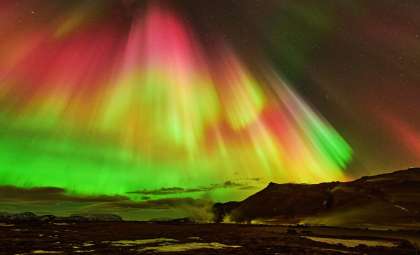
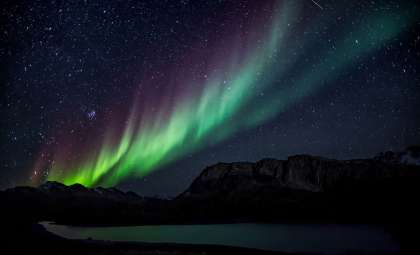
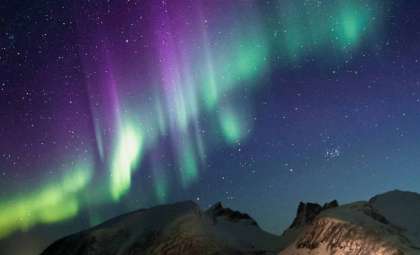
This process generates the aurora’s signature colors. Oxygen atoms primarily create the common green glow and can produce red hues under particular conditions. Nitrogen contributes to blue, violet, and red shades.
The aurora's appearance varies greatly. Some displays form faint arcs along the horizon, while others develop into undulating curtains, rays, or bands that shimmer across the sky. During intense geomagnetic storms, the auroral zone can stretch away from the poles, making the lights visible at lower latitudes.
Because this phenomenon depends on variable solar and geomagnetic activity, aurora visibility cannot be predicted with the same precision as solar or lunar eclipses. While forecasts offer valuable guidance, the spectacle itself remains ever-changing.
Tips to Maximize Your Northern Lights Viewing Experience
A positive forecast is only the start. Dark skies are essential for successfully spotting the aurora.
Artificial light from street lamps, buildings, and cities can easily obscure a faint auroral glow. Traveling to remote areas with minimal light pollution significantly improves viewing potential. A clear view of the northern horizon is especially helpful when the aurora stays near the poles.
Cloud cover can completely block the display regardless of auroral strength, so it’s important to check local weather forecasts alongside space weather reports.
For best results, give your eyes time to adjust to the dark and minimize exposure to bright screens. Using a smartphone camera with longer exposure settings may reveal colors that are too faint to see by eye, particularly when activity is low.
Patience is key, as auroral activity can fluctuate rapidly; a seemingly calm night can suddenly turn lively within moments.
- Categories:
- News



0 comments
Sign in to Comment