

New research reveals that humans have frequented the elevated regions of the Pyrenees for over 10,000 years. These mountainous zones served as recurring hubs for human activity from ancient hunter-gatherers through to modern eras.
Scientists at the Universitat Autònoma de Barcelona (UAB) have produced the first comprehensive timeline of human presence in the southern Pyrenees' high-altitude areas. Their work centers on the Aigüestortes i Estany de Sant Maurici National Park (PNAESM), where numerous archaeological sites have been documented.
By collecting 124 radiocarbon dates from 45 sites, the researchers developed an accessible database detailing when humans inhabited these mountain environments. The database offers lab results, dated samples’ contexts, and the scientific techniques applied.

Early Human Settlements in the High Pyrenees
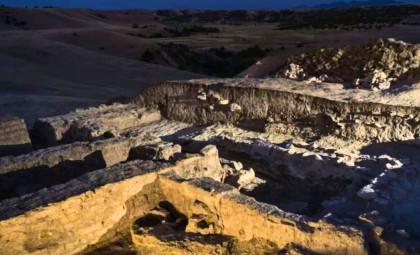
The earliest findings come from the Obagues de Ratera rock shelter, situated at 2,320 meters elevation. This site’s first human activity dates back approximately 10,000 years, soon after the last Ice Age ended.
The publication by the Universitat Autònoma de Barcelona highlights the shelter's long history, with use spanning the Mesolithic, transition to the Neolithic, subsequent prehistoric periods, the Bronze and early Iron Ages, the High Middle Ages, and ongoing activity into the 19th and 20th centuries.

Additional sites reveal comparable long-term occupation. The Cova del Sardo, at 1,780 meters, has evidence dating back roughly 7,500 years, and the Portarró rock shelter, at 2,280 meters, records human presence from about 7,300 years ago.
“This is an exceptional temporal sequence that very few sites in Catalonia have, not only in the high mountains,” said Guillem Salvador, co-author of the research.
Millennia of Human Activity Revealed by Ancient Shelters
The research team identified distinct intervals when human activity surged in these mountains, including a notable phase between 5,300 and 4,500 years ago at the end of the Neolithic, and other peaks during late antiquity and the early medieval era.
Ermengol Gassiot, leader of UAB’s High Mountain Archaeology Group (GAAM), notes that many sites, now remote and hard to reach, show signs of frequent human presence over time.

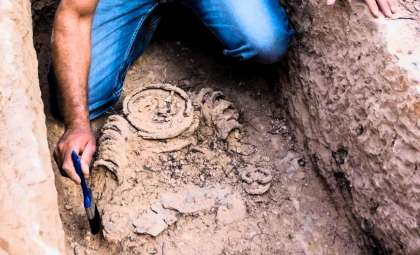
The archaeological record includes rock shelters, possible habitation zones, stone-built enclosures, and other constructs. At the Portarró rock shelter, excavations revealed a structure composed of dry stone and wood dating back about 5,000 years, regarded as the oldest example of stone architecture in the Pyrenees.
Findings also indicate that prehistoric groups ventured into alpine areas still recovering from glacial retreat. Excavations at Obagues de Ratera suggest small bands of hunter-gatherers explored these heights as warming allowed glaciers in cirques to persist but diminish.
A Pioneering Database Illuminates Ancient Pyrenean Human Presence
This study builds on over twenty years of archaeological exploration by Gassiot and colleagues at PNAESM. Their open-access database enables researchers to analyze human settlement patterns alongside environmental changes in mountain ecosystems.
Notably, the research highlights an era associated with Ötzi the Iceman, believed to have died about 5,300 years ago while crossing the Tisenjoch glacier. As noted:
“The data points to the fact that when Ötzi crossed the Tisenjoch glacier (and was killed) some 5,300 years ago, other high-mountain areas such as the PNAESM experienced a marked increase in human presence above 2,000 meters.”

Overall, these discoveries transform our understanding of the Pyrenees, highlighting its role as a recurrent destination for many generations of human communities traveling, utilizing, and revisiting these mountain landscapes.
- Categories:
- Science










0 comments
Sign in to Comment